
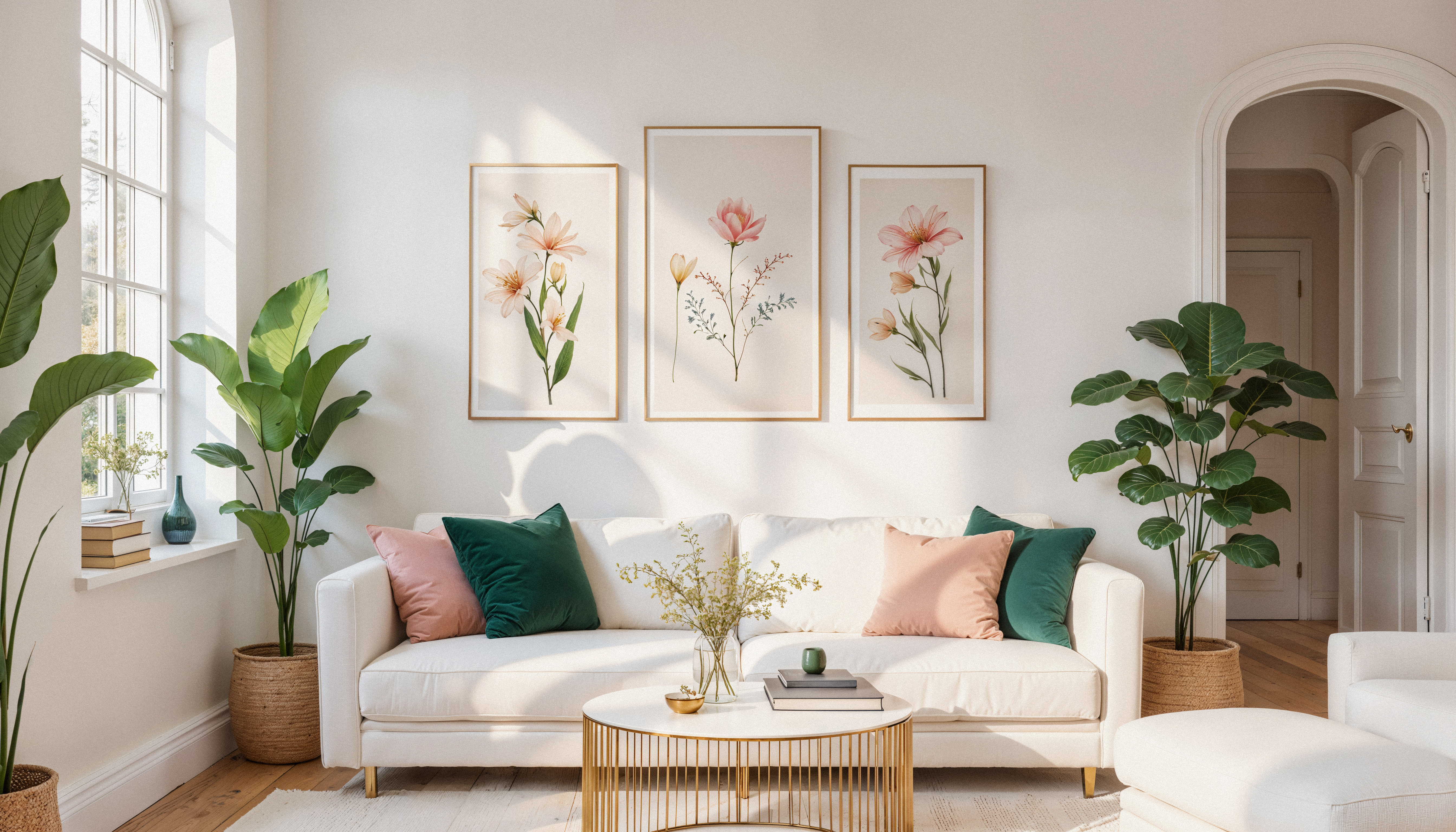
Colors play a vital role in interior design as they set the mood, influence emotions, and define the character of a space. The right color palette can make a room feel larger or cozier, brighter or calmer, and can highlight architectural features or décor. Warm colors like red, orange, and yellow bring energy and vibrancy, while cool shades like blue, green, and gray create a sense of calm and relaxation. Neutral tones provide balance and versatility, serving as a foundation for accents and textures. By carefully selecting and combining colors, interior designers create harmony, reflect personality, and transform ordinary spaces into inviting and inspiring environments.
A well-designed space relies on color harmony. This involves combining colors in a way that is pleasing to the eye. The color wheel is a great tool for achieving this. Complementary colors (opposite on the wheel, like blue and orange) create dynamic contrast, while analogous colors (next to each other, like green and yellow) offer a more harmonious and soothing effect.Color has a profound impact on our emotions and behaviors. Warm tones like red, orange, and yellow evoke feelings of energy, warmth, and excitement, making them ideal for social spaces like living rooms or dining areas. On the other hand, cool tones such as blue, green, and purple promote calmness and relaxation, perfect for bedrooms or meditation spaces.